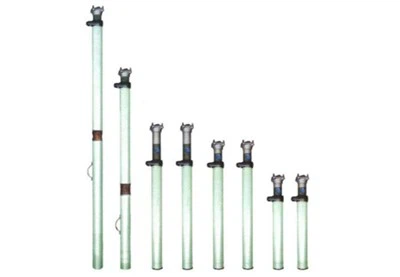

Hey there! As a supplier of A-type Beam Shape, I've been getting a lot of questions lately about how it stacks up against the well-known H-beam in terms of performance. So, I thought I'd sit down and write this blog to break it all down for you.
Structural Design and Geometry
Let's start with the basics - the design and geometry of these two types of beams. The H-beam, as the name suggests, has an 'H' shape when you look at its cross-section. This design gives it excellent load-bearing capabilities in both the vertical and horizontal directions. The flanges (the top and bottom horizontal parts) are great at resisting bending moments, while the web (the vertical part) helps with shear forces.


On the other hand, the A-type Beam Shape has a unique 'A' cross-sectional design. This shape provides a different distribution of stress and load. The angled sides of the A-type beam can offer some advantages in certain applications. For example, in some mining scenarios where the beam needs to fit into a specific space or where the load is coming from a particular angle, the A-type Beam Shape can be a better fit.
If you're in the mining industry, you might be interested in our Cross Roof Beam For Mining. It's an A-type Beam Shape product that's specifically designed to meet the demanding conditions of mining operations.
Load-Bearing Capacity
When it comes to load-bearing capacity, the H-beam is often considered a heavyweight. Its wide flanges and thick web allow it to handle large vertical loads, making it a popular choice for high-rise buildings, bridges, and other large-scale construction projects. The H-beam's symmetrical design also means that it can distribute the load evenly across its structure, reducing the risk of localized stress and failure.
However, the A-type Beam Shape shouldn't be underestimated. While it may not have the same raw load-bearing capacity as the H-beam in all situations, it can be very effective in applications where the load is more concentrated or where the beam needs to support loads at an angle. For example, in a mine, the roof load may not be evenly distributed, and the A-type Beam Shape can be engineered to handle these non-uniform loads more efficiently. Our Mine Roof-Beam is a great example of an A-type Beam Shape product that's designed to handle the unique load conditions in mines.
Flexibility and Adaptability
One area where the A-type Beam Shape really shines is in its flexibility and adaptability. The unique shape of the A-type beam allows it to be used in a wider range of applications compared to the H-beam. It can be easily modified and customized to fit different spaces and load requirements. For example, in a retrofit project where the existing structure has limited space, the A-type Beam Shape can be a great alternative to the larger and more rigid H-beam.
In addition, the A-type Beam Shape can be used in combination with other structural elements to create more complex and efficient structures. Its angled sides can provide additional support and stability, allowing for innovative design solutions. Our Double Hole and Double Wedge Top Beam is a prime example of how the A-type Beam Shape can be adapted to meet specific design needs.
Cost-Effectiveness
Cost is always an important factor in any construction or engineering project. In general, the H-beam is a well-established and widely used product, which means that it benefits from economies of scale. This often results in a lower cost per unit compared to the A-type Beam Shape. However, when you take into account the total cost of a project, including installation, maintenance, and long-term performance, the A-type Beam Shape can sometimes be a more cost-effective option.
For example, in a mining project, the A-type Beam Shape may require less support and reinforcement due to its ability to handle non-uniform loads more efficiently. This can result in lower installation costs and reduced maintenance requirements over the life of the project. Additionally, the flexibility and adaptability of the A-type Beam Shape can sometimes eliminate the need for expensive custom fabrication of other structural elements, further reducing the overall cost.
Corrosion Resistance
Another important consideration is corrosion resistance. In harsh environments such as mines or coastal areas, corrosion can significantly reduce the lifespan of a beam and increase maintenance costs. Both the H-beam and the A-type Beam Shape can be treated with anti-corrosion coatings to protect them from the elements.
However, the unique shape of the A-type Beam Shape can sometimes provide better corrosion resistance in certain situations. The angled sides of the A-type beam can help to shed water and prevent the accumulation of moisture, which is a major cause of corrosion. This can result in a longer lifespan and lower maintenance costs for the A-type Beam Shape compared to the H-beam in some applications.
Conclusion
So, how does the A-type Beam Shape compare to the H-beam in terms of performance? Well, it really depends on the specific application and requirements of your project. The H-beam is a tried and true option that offers excellent load-bearing capacity and is well-suited for large-scale construction projects. However, the A-type Beam Shape offers unique advantages in terms of flexibility, adaptability, and cost-effectiveness in certain situations.
If you're interested in learning more about our A-type Beam Shape products or discussing how they can be used in your project, I'd love to hear from you. Feel free to reach out to me to start a conversation about your specific needs and how we can help you find the best solution.
References
- Structural Steel Design Handbook
- Mining Engineering Textbooks