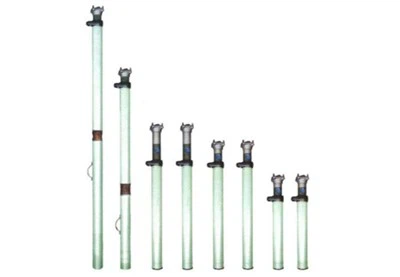

Hey there! As a supplier of mine roof - beams, I've dealt with all sorts of questions from customers over the years. One question that comes up quite often is, "How to determine the optimal thickness of a mine roof - beam?" It's a crucial issue, and getting it right can make a huge difference in the safety and efficiency of mining operations.
Let's start by understanding why the thickness of a mine roof - beam matters so much. In a mining environment, the roof - beam is like the backbone of the support system. It has to bear the weight of the overlying rock strata and prevent roof collapses. If the beam is too thin, it won't be able to handle the load, which can lead to dangerous situations like roof falls. On the other hand, if it's too thick, it can be over - engineered, leading to unnecessary costs in terms of material and installation.
Factors Affecting the Optimal Thickness
Geological Conditions
The first and most important factor is the geological conditions of the mine. Different mines have different rock types, stress distributions, and fault patterns. For example, in a mine with hard, stable rock, the roof - beam may not need to be as thick as in a mine with soft, fractured rock.
Hard rock, like granite or quartzite, has high compressive strength. It can support itself to a certain extent, so the roof - beam mainly needs to provide additional stability. In such cases, a relatively thinner beam might be sufficient. However, in mines with soft rock, such as shale or sandstone, the rock is more prone to deformation and failure. The roof - beam has to take on a greater share of the load, which usually requires a thicker beam.
Stress distribution also plays a vital role. In some mines, there may be areas of high stress concentration due to tectonic activity or mining - induced stress. These areas need stronger support, and a thicker roof - beam may be necessary. Faults and fractures in the rock can also weaken the overall stability of the roof. If a roof - beam is installed across a fault or a highly fractured zone, it needs to be thick enough to withstand the additional forces.
Mining Method
The mining method used in the mine also affects the optimal thickness of the roof - beam. There are several mining methods, such as room - and - pillar mining, longwall mining, and sublevel caving.
In room - and - pillar mining, large pillars of rock are left in place to support the roof. The roof - beam is used to provide additional support between the pillars. The thickness of the beam depends on the size of the rooms and the spacing between the pillars. If the rooms are large and the pillar spacing is wide, a thicker beam is required to span the distance and support the roof.
Longwall mining involves the continuous extraction of a long panel of coal or ore. The roof - beam has to support the roof as the mining face advances. In this method, the beam is subjected to dynamic loads due to the movement of the mining equipment and the changing stress conditions. A thicker and more robust roof - beam is often needed to handle these dynamic loads.
Sublevel caving is a method where the ore is extracted from different levels. This method can cause significant ground movement and stress changes in the roof. The roof - beam has to be thick enough to adapt to these changes and maintain the stability of the roof.
Beam Material
The material of the roof - beam is another important consideration. Different materials have different mechanical properties, such as strength, stiffness, and ductility.
Steel is one of the most commonly used materials for mine roof - beams. It has high strength and good ductility, which means it can deform to some extent before failing. The thickness of a steel roof - beam depends on its grade and the design requirements. Higher - grade steel can have a higher strength - to - weight ratio, which may allow for a thinner beam compared to lower - grade steel.
Timber is also used in some mines, especially in small - scale or low - stress applications. Timber has the advantage of being relatively inexpensive and easy to install. However, its strength is limited compared to steel. A timber roof - beam usually needs to be thicker than a steel beam to provide the same level of support.
Calculating the Optimal Thickness
Now that we've discussed the factors affecting the optimal thickness, let's talk about how to calculate it. There are several methods and tools available for this purpose.
Engineering Calculations
One way is to use engineering calculations based on the principles of mechanics. These calculations involve determining the loads acting on the roof - beam, such as the weight of the overlying rock, the dynamic loads from mining equipment, and the additional loads due to stress concentration.
The first step is to estimate the load per unit length of the roof - beam. This can be done by considering the density of the rock, the height of the overlying strata, and the area supported by the beam. Once the load is determined, the beam can be analyzed as a structural element using beam theory.
For a simply - supported beam, the maximum bending moment and shear force can be calculated. The bending moment is related to the deflection and stress in the beam. The thickness of the beam can then be determined based on the allowable stress of the beam material. The allowable stress is the maximum stress that the material can withstand without failure.
Numerical Modeling
Another approach is to use numerical modeling techniques. Software programs, such as FLAC (Fast Lagrangian Analysis of Continua) or UDEC (Universal Distinct Element Code), can simulate the behavior of the rock mass and the roof - beam under different conditions.
These models can take into account the complex geological conditions, stress distributions, and interactions between the rock and the beam. They can provide detailed information about the stress and deformation in the roof - beam, which can be used to optimize its thickness. For example, a numerical model can show how the stress in the beam changes as the mining face advances or as the rock mass deforms. Based on this information, the thickness of the beam can be adjusted to ensure its safety and efficiency.


Our Product Range
As a mine roof - beam supplier, we offer a wide range of products to meet different needs. We have Double Hole and Double Wedge Top Beam, which is designed for easy installation and provides excellent support. The double - hole and double - wedge design allows for a more secure connection between the beam and the roof support system.
Our Articulated Roof Beams Mine Supporting is suitable for mines with complex roof geometries. The articulated design allows the beam to adapt to the shape of the roof, providing better support in irregularly shaped mines.
We also have Non - hinged Top Beam, which is a simple and reliable option for mines with relatively stable roofs. It is easy to install and can provide effective support for the roof.
Conclusion
Determining the optimal thickness of a mine roof - beam is a complex process that requires considering multiple factors, such as geological conditions, mining method, and beam material. By using engineering calculations and numerical modeling, we can make more accurate decisions.
At our company, we understand the importance of providing the right roof - beam for each mine. Our team of experts can help you analyze your mine's conditions and select the most suitable roof - beam with the optimal thickness. If you're in the market for mine roof - beams or have any questions about determining the right thickness, don't hesitate to contact us for a detailed discussion and procurement negotiation.
References
- Hoek, E., & Brown, E. T. (1980). Underground Excavations in Rock. Institution of Mining and Metallurgy.
- Brady, B. H. G., & Brown, E. T. (2004). Rock Mechanics for Underground Mining. Kluwer Academic Publishers.
- Peng, S. S. (2008). Coal Mine Ground Control. Wiley - Interscience.