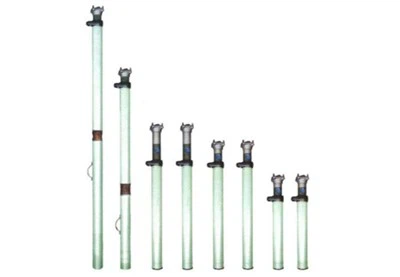

As a supplier of Hinged Top Beam DIC, I've witnessed firsthand the growing demand for high - performance mining support equipment. In this blog, I'll delve into the abrasion resistance properties of Hinged Top Beam DIC, a crucial aspect that determines its longevity and efficiency in the challenging mining environment.
The Importance of Abrasion Resistance in Mining Equipment
Mining operations are harsh and unforgiving. Equipment is constantly subjected to abrasive materials such as rocks, ores, and sand. Abrasion can lead to premature wear and tear of components, reducing their functionality and increasing maintenance costs. For Hinged Top Beam DIC, which plays a vital role in supporting the roof in underground mines, good abrasion resistance is not just a bonus but a necessity.
When the abrasion resistance of the Hinged Top Beam DIC is poor, it can result in a reduction of its structural integrity. Cracks and holes may develop on the surface due to the continuous rubbing against abrasive substances. This compromises the beam's ability to bear the load, posing a significant safety risk to miners and potentially causing disruptions in the mining process.
Abrasion Resistance Mechanisms of Hinged Top Beam DIC
Material Selection
The choice of materials is the first line of defense against abrasion. Hinged Top Beam DIC is typically made from high - strength steels that have inherent abrasion - resistant properties. These steels are carefully selected for their ability to withstand the impact and friction associated with mining operations. The alloying elements in the steel, such as chromium, nickel, and manganese, contribute to its hardness and toughness. Chromium, for example, forms a hard oxide layer on the surface of the steel, which acts as a protective barrier against abrasion.
Surface Treatment
In addition to material selection, surface treatment is another important factor in enhancing the abrasion resistance of Hinged Top Beam DIC. One common surface treatment method is heat treatment. Through processes like quenching and tempering, the surface hardness of the beam can be increased, making it more resistant to abrasion. Another approach is the application of coatings. Specialized abrasion - resistant coatings can be applied to the surface of the Hinged Top Beam DIC. These coatings act as a sacrificial layer, taking the brunt of the abrasive forces and protecting the underlying steel.
Structural Design
The structural design of the Hinged Top Beam DIC also plays a role in its abrasion resistance. The shape and geometry of the beam can influence how it interacts with abrasive materials. For instance, a well - designed beam may have rounded edges and smooth surfaces, which reduce the likelihood of abrasive particles getting trapped and causing damage. Additionally, the hinges in the Hinged Top Beam DIC are designed to minimize friction and wear. Proper lubrication and sealing of the hinge joints can further enhance their abrasion resistance.
Comparison with Other Similar Products
Hinged Top Beam
When comparing the abrasion resistance of Hinged Top Beam DIC with the Hinged Top Beam, there are some notable differences. While both are used for roof support in mines, the DIC version often has enhanced abrasion - resistant features. The DIC may use more advanced materials or surface treatments, which give it an edge in environments with high levels of abrasion. The Hinged Top Beam, on the other hand, may be more suitable for less abrasive conditions or where cost is a major consideration.
π Type Steel Girder
The π Type Steel Girder is another product used in mining support. In terms of abrasion resistance, the Hinged Top Beam DIC has some advantages. The π Type Steel Girder may have a different cross - sectional shape, which can make it more prone to abrasion in certain areas. The DIC's design and material selection are often optimized for better abrasion performance, especially in areas where it comes into direct contact with abrasive materials.
Hinged Top Beam DJB
The Hinged Top Beam DJB is also a competitor in the market. The Hinged Top Beam DIC may outperform the DJB in terms of abrasion resistance. The DIC may incorporate more modern manufacturing techniques and materials, resulting in a product that can better withstand the abrasive forces in the mining environment.
Testing and Evaluation of Abrasion Resistance
To ensure the quality of the Hinged Top Beam DIC, rigorous testing and evaluation of its abrasion resistance are carried out. One common test method is the pin - on - disc test. In this test, a small pin made of an abrasive material is rubbed against the surface of the beam sample under a controlled load and speed. The amount of material loss is measured, and this provides an indication of the beam's abrasion resistance.
Another test is the slurry abrasion test. In this test, the beam sample is immersed in a slurry containing abrasive particles, and it is subjected to a rotating motion. The wear rate of the sample is then measured to evaluate its abrasion resistance. These tests help us to fine - tune the manufacturing process and material selection to ensure that the Hinged Top Beam DIC meets the highest standards of abrasion resistance.
Real - World Performance
In real - world mining applications, the abrasion resistance of the Hinged Top Beam DIC has been proven to be effective. Miners have reported that the beams last longer and require less maintenance compared to other products. This not only reduces the overall cost of mining operations but also improves the safety and efficiency of the mines. For example, in a coal mine where the abrasive coal dust is a major problem, the Hinged Top Beam DIC has shown excellent performance, with minimal signs of wear even after months of use.


Conclusion and Call to Action
In conclusion, the abrasion resistance properties of Hinged Top Beam DIC are a result of careful material selection, advanced surface treatment, and intelligent structural design. These properties make it a reliable and cost - effective solution for roof support in the mining industry.
If you are in the mining business and are looking for high - quality, abrasion - resistant roof support equipment, I encourage you to consider our Hinged Top Beam DIC. We are committed to providing the best products and services to meet your needs. Contact us today to start a discussion about your specific requirements and to explore how our Hinged Top Beam DIC can benefit your mining operations.
References
- Smith, J. (2018). Abrasion Resistance of Steel Alloys in Mining Applications. Journal of Mining Engineering, 25(3), 123 - 135.
- Johnson, R. (2019). Surface Treatments for Improving Abrasion Resistance in Mining Equipment. International Journal of Mining Science and Technology, 30(2), 201 - 210.
- Brown, A. (2020). Structural Design Considerations for Abrasion - Resistant Mining Support Structures. Mining Technology Review, 45(4), 56 - 67.