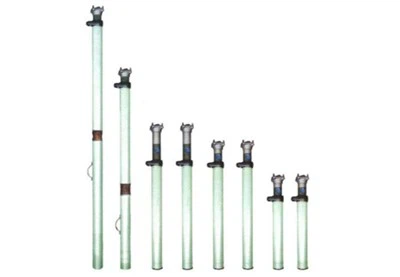

As a supplier of non-hinged top beams, I've had the privilege of witnessing the diverse applications and requirements across various industries. Non-hinged top beams are crucial components in many structural systems, offering stability and support where needed. In this blog, I'll delve into the common cross-sectional shapes of non-hinged top beams, exploring their characteristics, advantages, and typical use cases.
I. Rectangular Cross-Section
The rectangular cross-section is one of the most straightforward and widely used shapes for non-hinged top beams. Its simplicity in design makes it easy to manufacture and install, which is a significant advantage in construction projects.


1. Characteristics
- Uniformity: The rectangular shape provides a consistent distribution of material, which is beneficial for load-bearing applications. The flat surfaces of the rectangle make it easy to connect with other structural elements, such as columns or walls.
- Flexibility: Rectangular beams can be easily customized in terms of width and height to meet specific load requirements. By adjusting the dimensions, engineers can optimize the beam's strength and stiffness for different applications.
2. Advantages
- Cost - effective: The manufacturing process for rectangular beams is relatively simple, which often results in lower production costs compared to more complex shapes. This makes them an attractive option for budget - conscious projects.
- Versatility: They can be used in a wide range of applications, from residential construction to industrial buildings. Whether it's supporting a small roof in a house or a large industrial shed, rectangular non - hinged top beams can get the job done.
3. Use Cases
- Residential Construction: In homes, rectangular non - hinged top beams are commonly used to support the roof structure. They can span across multiple rooms and provide a stable base for the roofing materials.
- Warehouses: Warehouses often require large open spaces, and rectangular beams can be used to create the necessary support structures. Their ability to span long distances without the need for intermediate supports makes them ideal for these types of buildings.
II. I - Beam Cross-Section
The I - beam, also known as an H - beam or a universal beam, is another popular choice for non - hinged top beams. Its unique shape offers several advantages in terms of strength and efficiency.
1. Characteristics
- High Moment of Inertia: The I - beam's shape is designed to maximize the moment of inertia, which is a measure of a beam's resistance to bending. The flanges (the horizontal parts of the I) are located at the top and bottom of the beam, where the bending stresses are the highest. This distribution of material allows the beam to withstand large bending loads with relatively less material compared to a solid rectangular beam.
- Asymmetry in Loading: I - beams are typically designed to be stronger in the vertical direction, making them well - suited for applications where the primary load is applied vertically, such as in building frames.
2. Advantages
- Strength and Efficiency: The I - beam's design allows it to carry heavy loads while using less material, which reduces the overall weight of the structure. This not only saves on material costs but also makes the construction process more manageable.
- Ease of Connection: The flanges of the I - beam provide a convenient surface for connecting to other structural elements. Bolts, welds, or other connection methods can be easily applied to the flat surfaces of the flanges.
3. Use Cases
- Skyscrapers: In high - rise buildings, I - beams are used extensively in the structural framework. Their ability to support large vertical loads over long spans is essential for the stability of these tall structures.
- Bridges: Bridges also rely on I - beams to support the weight of traffic and the bridge deck itself. The high strength - to - weight ratio of I - beams makes them a popular choice for bridge construction.
III. Circular Cross-Section
Circular cross - section non - hinged top beams are less common than rectangular or I - beams but still have their place in certain applications.
1. Characteristics
- Uniform Stress Distribution: A circular beam distributes stress evenly around its circumference. This makes it suitable for applications where the load is applied from multiple directions or where there is a risk of torsional (twisting) forces.
- Aesthetic Appeal: Circular beams can add a unique and modern look to a structure, which is often desired in architectural designs.
2. Advantages
- Resistance to Torsion: The circular shape provides excellent resistance to torsional forces, making it ideal for applications where the beam may be subjected to twisting, such as in some mechanical or industrial systems.
- Smooth Surface: The smooth outer surface of a circular beam can be beneficial in applications where hygiene or ease of cleaning is important, such as in food processing facilities.
3. Use Cases
- Mechanical Engineering: In mechanical systems, circular non - hinged top beams are used in shafts and axles. Their ability to resist torsional forces makes them suitable for transmitting power and torque.
- Architectural Structures: Some modern buildings use circular beams for their aesthetic value. They can create a unique visual effect and add a touch of elegance to the overall design.
IV. T - Beam Cross-Section
The T - beam is a combination of a flange and a web, similar to an I - beam but with only one flange. This shape offers some unique advantages in certain situations.
1. Characteristics
- Combined Strength: The T - beam combines the strength of the flange (which resists bending) and the web (which resists shear). This makes it a good choice for applications where both bending and shear forces are present.
- Shallow Depth: T - beams can be designed to have a relatively shallow depth compared to other beams, which can be beneficial in applications where space is limited.
2. Advantages
- Space Efficiency: Their shallow depth allows for more headroom in a building or structure. This can be particularly useful in basements or areas where vertical space is at a premium.
- Cost - effective for Some Applications: In situations where the load requirements can be met with a T - beam, they can be a more cost - effective alternative to other beam shapes.
3. Use Cases
- Floor Systems: T - beams are commonly used in floor systems, especially in buildings with large open areas. They can support the floor slabs and distribute the load evenly across the columns.
- Parking Garages: Parking garages often use T - beams to support the floors. Their ability to span long distances and support heavy vehicle loads makes them suitable for this type of application.
V. Comparison with Hinged Top Beams
It's important to note the differences between non - hinged top beams and Hinged Top Beam and Hinged Top Beam DJB. Hinged top beams are designed to allow for some degree of movement or rotation at the connection points. This can be useful in situations where there are thermal expansion and contraction, seismic activity, or where the structure needs to be adjustable.
Non - hinged top beams, on the other hand, provide a more rigid connection. They are better suited for applications where stability and fixed support are required. For example, in a building where the structure needs to maintain its shape and position under all normal loading conditions, non - hinged top beams are the way to go.
VI. The Role of Metal Long Beams
Metal Long Beam is a term often associated with non - hinged top beams. Metals such as steel are commonly used to manufacture these beams due to their high strength, durability, and resistance to corrosion.
Metal long beams can be fabricated into various cross - sectional shapes, including the ones mentioned above. The choice of metal and the specific cross - section will depend on the application requirements, such as the load capacity, span length, and environmental conditions.
VII. Conclusion
In conclusion, the choice of cross - sectional shape for non - hinged top beams depends on a variety of factors, including the load requirements, cost, space availability, and aesthetic preferences. Each shape has its own unique characteristics, advantages, and use cases.
As a supplier of non - hinged top beams, I understand the importance of providing the right product for each project. Whether you're a contractor working on a small residential building or an engineer designing a large industrial complex, I can offer a range of non - hinged top beams in different cross - sectional shapes to meet your needs.
If you're interested in purchasing non - hinged top beams for your next project, I encourage you to reach out for a detailed discussion. We can work together to determine the best beam shape and material for your specific requirements. Let's start the conversation and find the perfect solution for your construction needs.
References
- "Structural Steel Design" by Jack C. McCormac
- "Building Construction Handbook" by Edward Allen and Joseph Iano