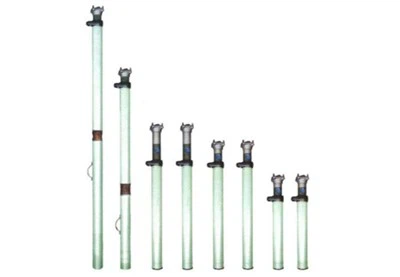

As a trusted supplier of A-type Beam Shape, I've delved deep into the intricacies of its stress distribution characteristics. Understanding these features is crucial not only for engineers and designers but also for end - users who rely on the structural integrity of our products. In this blog, I'll share my insights on what makes the stress distribution in A-type Beam Shape unique.
Basic Structure of A-type Beam Shape
The A-type Beam Shape, as the name implies, has a structure that resembles the letter 'A'. This geometric configuration provides it with a distinct set of load - bearing capabilities. The two inclined sides of the 'A' act as support elements, distributing the load in a way that differs from traditional beam shapes.
The base of the A-type Beam Shape is usually wider, which gives it a stable foundation. When a load is applied on top of the beam, the forces are transferred downwards along the inclined sides towards the base. This transfer of forces creates a complex stress distribution pattern that is influenced by several factors.
Factors Affecting Stress Distribution
1. Load Type
The type of load applied to the A-type Beam Shape significantly impacts its stress distribution. There are mainly two types of loads: static and dynamic. Static loads are constant and do not change over time, such as the weight of a structure resting on the beam. Dynamic loads, on the other hand, are variable and can include forces like wind, seismic activity, or moving machinery.


In the case of static loads, the stress is distributed relatively evenly along the inclined sides of the A - type Beam Shape. The load is gradually transferred from the top to the base, and the maximum stress usually occurs at the points where the inclined sides meet the base. For dynamic loads, the stress distribution becomes more complex. The sudden changes in force can cause stress concentrations at certain points, especially if the frequency of the dynamic load matches the natural frequency of the beam, leading to resonance.
2. Material Properties
The material from which the A-type Beam Shape is made also plays a vital role in stress distribution. Different materials have different elastic moduli, strengths, and ductility. For example, steel is a commonly used material for A - type beams due to its high strength and good ductility. Steel can withstand high stresses without permanent deformation, and it distributes stress more uniformly compared to brittle materials like concrete.
Concrete, while strong in compression, is relatively weak in tension. When used in an A - type Beam Shape, proper reinforcement is required to ensure that the tensile stresses are adequately handled. The interaction between the concrete and the reinforcement affects the overall stress distribution in the beam.
3. Beam Dimensions
The dimensions of the A-type Beam Shape, including the height, width of the base, and the angle of the inclined sides, have a direct impact on stress distribution. A taller beam will generally have a different stress distribution compared to a shorter one. As the height increases, the bending moment at the base of the beam also increases, which can lead to higher stresses.
The width of the base affects the stability of the beam. A wider base can distribute the load over a larger area, reducing the stress at the base. The angle of the inclined sides determines how the load is transferred from the top to the base. A steeper angle may result in a more rapid transfer of forces, while a shallower angle can lead to a more gradual distribution.
Stress Distribution Patterns
1. Compressive Stress
Compressive stress is one of the primary types of stress in an A - type Beam Shape. When a load is applied on top of the beam, the inclined sides are subjected to compressive forces. The maximum compressive stress usually occurs at the points where the load is applied and at the base of the beam.
The compressive stress distribution along the inclined sides is not uniform. It is highest at the top and gradually decreases towards the base. This is because the load is being distributed over a larger area as it moves down the inclined sides. The shape of the A - type Beam Shape helps to channel the compressive forces towards the base, where they are absorbed by the foundation.
2. Tensile Stress
Tensile stress also exists in an A - type Beam Shape, especially in the lower part of the inclined sides. As the beam bends under the load, the outer fibers of the inclined sides are stretched, resulting in tensile stress. The magnitude of the tensile stress depends on the load, the material properties, and the dimensions of the beam.
In some cases, if the tensile stress exceeds the tensile strength of the material, cracks may develop. This is why proper design and material selection are crucial to ensure that the beam can withstand both compressive and tensile stresses.
3. Shear Stress
Shear stress is another important aspect of stress distribution in an A - type Beam Shape. Shear stress occurs when two parts of the beam slide relative to each other. In an A - type beam, shear stress is present at the cross - sections of the inclined sides.
The shear stress distribution is influenced by the load and the geometry of the beam. At the points where the load is applied, the shear stress is relatively high. As the load is transferred down the inclined sides, the shear stress gradually decreases.
Applications and Advantages
The unique stress distribution characteristics of A - type Beam Shape make it suitable for a variety of applications. In the mining industry, Mine Roof - Beam often utilizes A - type Beam Shape designs. The ability of the beam to distribute the load effectively helps to support the roof of the mine, reducing the risk of collapse.
In construction, Cross Hinged Top Beam and Double Wedge Top Beam DJBS with A - type Beam Shape configurations are used in structures where stability and load - bearing capacity are essential. The stress distribution in these beams ensures that the structure can withstand various types of loads, including wind and seismic forces.
One of the main advantages of the A - type Beam Shape is its stability. The triangular configuration provides a natural resistance to lateral forces, making it ideal for structures in windy or seismic areas. Additionally, the efficient stress distribution allows for the use of less material while still maintaining the required strength, which can result in cost savings.
Conclusion
In conclusion, the stress distribution characteristics in A - type Beam Shape are complex and influenced by multiple factors such as load type, material properties, and beam dimensions. Understanding these characteristics is essential for designing and using A - type beams effectively.
As a supplier of A - type Beam Shape, we have the expertise and experience to provide high - quality products that meet the specific requirements of our customers. Whether you are involved in mining, construction, or any other industry that requires reliable beam structures, we can offer you the right solution.
If you are interested in our A - type Beam Shape products and would like to discuss your procurement needs, we invite you to reach out to us for a detailed consultation. Our team of experts is ready to assist you in finding the best beam solution for your project.
References
- Timoshenko, S. P., & Goodier, J. N. (1970). Theory of Elasticity. McGraw - Hill.
- Gere, J. M., & Timoshenko, S. P. (1997). Mechanics of Materials. PWS Publishing.
- McCormac, J. C., & Brown, J. K. (2013). Structural Analysis: A Unified Classical and Matrix Approach. Wiley.