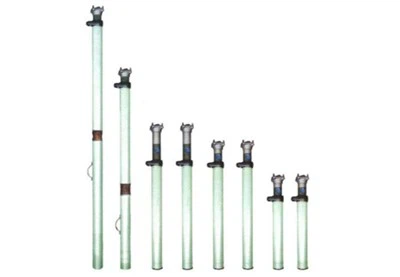

Hey there, all you folks interested in metal long beams! As a supplier in the metal long beam game, I've seen firsthand the importance of understanding different factors that affect these beams. One of those crucial factors is wind load. So, let's dive into what the effect of wind load on a metal long beam really is.
Understanding Wind Load
First things first, what exactly is wind load? Well, it's the force exerted by the wind on a structure. Wind doesn't just blow gently all the time. It can have different speeds, directions, and gusts. And when it comes to a metal long beam, this force can have various impacts.
There are different types of wind forces. Static wind load is the constant pressure from the wind when it's blowing at a relatively steady speed. Dynamic wind load, on the other hand, occurs when there are gusts or changes in wind direction. These dynamic forces can be a lot more challenging for a metal long beam to handle.
Impact on Structural Integrity
The most obvious effect of wind load on a metal long beam is on its structural integrity. A long beam is designed to support certain loads over a distance. When wind comes into play, it adds an extra load to the beam.
If the wind load is too high, it can cause the beam to bend. This bending might be visible as a slight curve in the beam. In extreme cases, excessive bending can lead to permanent deformation. That's a big problem because a deformed beam might not be able to support the loads it was originally intended for.
Another issue is the possibility of buckling. Buckling happens when the beam suddenly loses its stability under the wind load. It's like a straw collapsing when you push too hard on the ends. Once a metal long beam buckles, it's pretty much useless and needs to be replaced.
Effects on Use and Installation
Wind load also affects how we use and install metal long beams. When installing a long beam in an area with high wind, we need to take extra precautions. For example, in coastal regions where strong winds are common, the installation process might be more complex.
We might need to use additional support structures to help the beam withstand the wind. This could include adding braces or using stronger connections. Also, the orientation of the beam matters. Installing it in the right direction can reduce the impact of the wind load. If the beam is perpendicular to the main wind direction, it might experience more force than if it's parallel.
In terms of use, a beam that has been exposed to high wind loads for a long time might need more frequent inspections. We have to make sure that it's still in good condition and safe to use. If we notice any signs of damage, we need to address them right away.
Real - World Examples
Let's take a look at some real - world scenarios where wind load has affected metal long beams. Imagine a large industrial building with metal long beams as the main structural support. On a windy day, if the beams weren't designed to handle the wind load properly, the building could face serious problems.
There could be leaks in the roof, as the beams might shift slightly under the wind force, causing gaps in the roofing materials. In extreme cases, parts of the building could even collapse. This not only poses a safety risk but also results in significant financial losses.


Another example is in the construction of bridges. Many bridges use metal long beams. High - speed winds can cause the bridge to vibrate. These vibrations might seem small at first, but over time, they can lead to fatigue in the beams. Fatigue can cause cracks to form, which can eventually weaken the entire bridge structure.
Our Metal Long Beams and Wind Load
As a supplier of metal long beams, we're well - aware of the effects of wind load. That's why we put a lot of effort into designing and manufacturing beams that can withstand different wind conditions.
We use high - quality metals that have good strength and durability. Our beams are also engineered to have the right shape and cross - section. These geometric features play a crucial role in how well the beam can handle wind load. For example, a beam with a streamlined cross - section can reduce the drag caused by the wind.
We also offer different types of metal long beams for various applications. Whether you're building a Cross Roof Beam For Mining, a Double Wedge Top Beam DJBS, or a Mine Roof - Beam, we've got you covered. In mining applications, the wind load might not be as obvious as in a tall building, but it's still a factor, especially in open - pit mines where the beams are exposed to the elements.
Importance of Choosing the Right Beam
Choosing the right metal long beam for your project is crucial when it comes to dealing with wind load. You can't just pick any beam and expect it to work well in all conditions.
You need to consider the location of your project. If it's in an area with high wind speeds, like a mountain pass or a coastal area, you'll need a beam with a higher wind - load capacity. You also need to think about the height of the structure. Taller structures are more exposed to wind and might require stronger beams.
Our team of experts can help you choose the right beam for your specific project. We take into account all the factors related to wind load and other loads to make sure you get a beam that will perform well and last a long time.
Conclusion
So, what's the bottom line? Wind load has a significant effect on metal long beams. It can affect the structural integrity, the installation, and the long - term use of the beams. But with the right knowledge and the right beams, you can deal with these challenges.
If you're in need of metal long beams for your project, whether it's for mining or any other application, don't hesitate to reach out to us. We're here to help you choose the best beams to withstand wind load and other factors. Contact us today to start a conversation about your project and find the perfect metal long beams for you.
References
- Bai, Y. L., & Chen, W. F. (2008). Stability analysis of steel frames under wind loads. CRC Press.
- Simiu, E., & Scanlan, R. H. (1996). Wind effects on structures: Fundamentals and applications to design. Wiley.
- AASHTO. (2017). AASHTO LRFD Bridge Design Specifications. American Association of State Highway and Transportation Officials.