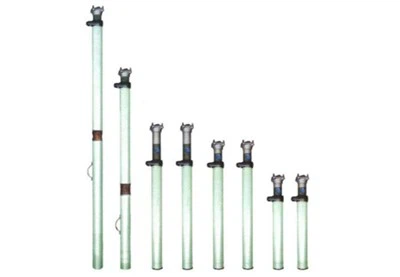

Hey there! As a supplier of Cross Roof Beams For Mining, I've been getting a lot of questions lately about the maximum span that these beams can cover. So, I thought I'd take a few minutes to break it down for you.
First off, let's talk about what a cross roof beam is and why it's so important in mining. In simple terms, a cross roof beam is a structural element used to support the roof of a mine. It helps to distribute the weight of the overlying rock and soil, preventing collapses and ensuring the safety of miners. There are different types of cross roof beams available, such as the Mine Roof - Beam, Cross Hinged Top Beam, and Metal Long Beam. Each type has its own unique features and advantages, which we'll touch on later.
Now, the maximum span that a cross roof beam can cover isn't a one - size - fits - all answer. It depends on several factors.
1. Material of the Beam
The material used to make the cross roof beam is a major determinant of its span capacity. Most commonly, we use steel for these beams. Steel is known for its high strength - to - weight ratio. It can withstand a large amount of stress without deforming significantly. For example, high - strength steel beams can generally cover longer spans compared to lower - grade steel.
Let's say we have a standard mild steel cross roof beam. In relatively stable mining conditions, it might be able to cover a span of up to 3 - 5 meters. But if we switch to a high - strength alloy steel beam, we could potentially increase that span to 6 - 8 meters or more. This is because the high - strength alloy has better mechanical properties, like higher yield strength and ultimate tensile strength, which allow it to support more weight over a longer distance.
2. Load Conditions
The type and amount of load that the beam will bear also play a crucial role. In a mine, the load on a cross roof beam comes from the weight of the overlying rock strata, as well as any additional equipment or machinery that might be present in the area.
If the mine is in a region with thick, heavy rock layers, the load on the beam will be much higher. In such cases, the maximum span of the beam will be reduced. For instance, in a deep - coal mine where the overlying rock is several hundred meters thick, the beam might only be able to cover a span of 2 - 3 meters to safely support the weight. On the other hand, if the mine is in a shallower area with lighter rock, the beam could potentially cover a span of 5 - 7 meters.
3. Beam Design
The design of the cross roof beam can significantly affect its span capacity. Beams with a more efficient cross - sectional shape, like an I - beam or a box - beam, can distribute the load more evenly and are generally stronger than beams with a simple rectangular cross - section.
For example, an I - beam has a high moment of inertia, which means it can resist bending better. This allows it to cover longer spans compared to a rectangular beam of the same material and weight. Some cross roof beams are also designed with additional reinforcement, such as ribs or flanges, which further enhance their strength and increase the maximum span they can cover.
4. Ground Conditions
The stability of the ground where the beam is installed is another important factor. If the ground is soft or unstable, it can cause the beam to sink or shift, reducing its ability to support the roof over a long span.
In a mine with a lot of water seepage or where the rock is fractured, the ground conditions are less stable. In such situations, the maximum span of the cross roof beam may need to be reduced to ensure safety. On the contrary, in a mine with hard, stable rock, the beam can cover a longer span as the ground provides better support.
Now, let's talk a bit more about the different types of cross roof beams and how their features relate to the maximum span.
The Mine Roof - Beam is designed specifically for roof support in mines. It usually has a wide base and a tapered top, which helps to distribute the load evenly. Depending on its material and design, a well - made mine roof beam can cover a span of 4 - 7 meters, depending on the load and ground conditions.
The Cross Hinged Top Beam is unique because it has a hinged connection at the top. This allows for some flexibility in the beam's movement, which can be beneficial in mines where there is some ground movement or roof settlement. However, the hinged design also means that the beam's maximum span might be slightly less than a non - hinged beam of the same material. Typically, it can cover a span of 3 - 6 meters.
The Metal Long Beam is, as the name suggests, a long beam made of metal. These beams are often used when a longer span is required. With the right material and design, metal long beams can cover spans of up to 8 - 12 meters in relatively stable mining conditions. But again, this is highly dependent on the load and ground conditions.
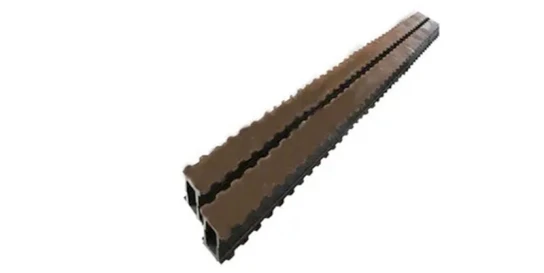

So, as you can see, determining the maximum span of a cross roof beam for mining is a complex process that involves considering multiple factors. There's no fixed number that can be applied across the board.
If you're involved in a mining project and need cross roof beams, it's crucial to work with a knowledgeable supplier. We've got years of experience in the industry and can help you choose the right beam for your specific needs. We take into account all the factors we've talked about and make sure you get a beam that can safely cover the required span in your mine.
Whether you're facing heavy loads, unstable ground, or need a long - span solution, we've got you covered. Don't hesitate to reach out to us for a consultation. We're here to answer your questions and help you find the best cross roof beam for your mining operation.
References
- “Structural Design of Coal Mine Roadways.” Mining Engineering Journal. Vol. 15, Issue 3.
- “Materials for Mine Support Structures.” International Journal of Mining Science and Technology. Vol. 22, Issue 2.
- “Ground Control in Mines.” Handbook of Mining Engineering. Second Edition.