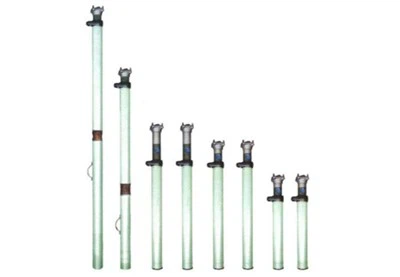

Hey there! As a supplier of Mine Hydraulic Propellers, I often get asked about how these nifty pieces of equipment actually work. So, I thought I'd put together this blog to explain the working principle of a mine hydraulic propeller in a way that's easy to understand.
First things first, let's start with a quick introduction to what a mine hydraulic propeller is. A mine hydraulic propeller, as the name suggests, is a hydraulic device used in mines. These props are crucial for providing support in underground mine workings, helping to prevent cave - ins and ensuring the safety of miners. If you're curious about the specific products, you can check out our Mine Hydraulic Propeller on our website.
The Basic Components
To understand the working principle, we need to know the main parts of a mine hydraulic propeller. There are a few key components:
- Cylinder and Piston: The cylinder is like a long tube, and the piston is a movable part that fits inside it. The piston can slide up and down within the cylinder.
- Hydraulic Fluid: This is a special liquid that's used to transfer force in the hydraulic system. It's usually an oil - based fluid that has good lubricating and sealing properties.
- Valve System: The valve system controls the flow of the hydraulic fluid in and out of the cylinder. It's what allows us to extend or retract the propeller.
How It Works: The Extension Process
The process of extending a mine hydraulic propeller starts with the operator. The operator activates the valve to allow hydraulic fluid to enter the cylinder.
When the valve is opened, the hydraulic fluid is pumped into the space below the piston inside the cylinder. As more and more fluid fills this space, the pressure below the piston increases. According to Pascal's principle, which basically states that a change in pressure at any point in an enclosed fluid is transmitted equally throughout the fluid, the increased pressure on the hydraulic fluid pushes the piston upwards.
As the piston moves up, it extends the propeller. The propeller then makes contact with the roof of the mine, providing the necessary support. The amount of force that the propeller can exert depends on the pressure of the hydraulic fluid and the surface area of the piston. In practical terms, the higher the pressure of the fluid and the larger the piston's surface area, the greater the support force the propeller can offer.
How It Works: The Retraction Process
When it's time to retract the mine hydraulic propeller, the operator manipulates the valve again. This time, the valve is adjusted to allow the hydraulic fluid to flow out of the cylinder.
As the fluid exits the space below the piston, the pressure in that area decreases. Gravity, along with any external forces pushing down on the propeller (like the weight of the rock above it), then causes the piston to move back down inside the cylinder. This makes the propeller retract, allowing it to be moved to a different location within the mine.
The Role of Safety Features
Safety is always a top priority in mines, and mine hydraulic propellers are equipped with several safety features. One important safety feature is the pressure relief valve. This valve is designed to prevent the pressure inside the cylinder from getting too high. If the pressure exceeds a certain limit (which could cause the cylinder to burst or the propeller to fail), the pressure relief valve opens, allowing some of the hydraulic fluid to escape. This reduces the pressure and protects the propeller from damage.
Another safety aspect is the locking mechanism. Once the propeller is extended to the desired height and provides the necessary support, the locking mechanism engages. This ensures that the propeller remains in place and doesn't accidentally retract, even if there's a small loss of hydraulic pressure.
Comparison with Other Types of Supports
There are other types of supports used in mines, such as the Acrow Prop Hydraulic Jack and the Steel Single Hydraulic Acrow Prop Jack. Compared to these, mine hydraulic propellers have some distinct advantages.
For example, hydraulic propellers can provide a more consistent and adjustable support force. With a hydraulic system, it's easy to increase or decrease the pressure of the fluid, which means we can fine - tune the support force according to the specific requirements of the mine. In contrast, some other types of supports may have a fixed support capacity and may not be as adaptable.
Maintenance and Long - Term Use
To ensure the long - term and reliable performance of mine hydraulic propellers, regular maintenance is essential. This includes checking the hydraulic fluid level and quality. Over time, the hydraulic fluid can become contaminated with dirt and debris, which can affect the performance of the propeller. So, it's important to change the fluid at regular intervals.


The valve system also needs to be inspected regularly. Any signs of leakage or malfunction in the valves should be addressed immediately. Additionally, the cylinder and piston should be checked for wear and tear. If there's too much wear, the propeller may not be able to provide the required support force.
Conclusion
So, there you have it! That's the working principle of a mine hydraulic propeller. These are amazing pieces of equipment that play a vital role in keeping mines safe. Whether you're a mining company looking for reliable support solutions or an individual interested in the mechanics of mining equipment, I hope this blog has given you a better understanding of how mine hydraulic propellers work.
If you're in the market for high - quality mine hydraulic propellers, don't hesitate to get in touch with us for a purchase negotiation. We're always ready to provide you with the best products and services to meet your needs.
References
- Mining Equipment Handbook
- Hydraulic Systems in Industrial Applications