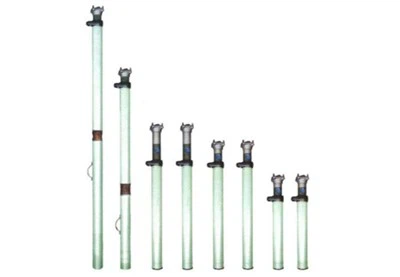

Hey there! I'm a supplier of Non - hinged Top Beams, and today I wanna chat about how to design a non - hinged top beam for fatigue loads. It's a topic that's super important in our industry, and I've got some insights to share based on my experience.
First off, let's understand what fatigue loads are. Fatigue loads occur when a beam is subjected to repeated or fluctuating stresses over time. These stresses can be caused by things like vibrations, wind loads, or the regular movement of machinery. If a non - hinged top beam isn't designed properly to handle these fatigue loads, it can lead to cracks, failures, and even dangerous situations.
Material Selection
The choice of material is crucial when designing a non - hinged top beam for fatigue loads. You want a material that has good fatigue resistance. Steel is often a top choice because it has high strength and can withstand a lot of stress cycles. For example, high - strength low - alloy (HSLA) steels are great as they offer a good balance between strength and ductility. Ductility is important because it allows the beam to deform slightly without cracking under fatigue loads.
Another factor to consider with materials is their surface finish. A smooth surface finish can reduce the stress concentration points on the beam. Stress concentrations are areas where the stress is much higher than the average stress in the beam, and they can be the starting points for fatigue cracks. So, when we're manufacturing our non - hinged top beams, we make sure to have a proper surface treatment to achieve that smooth finish.
Geometric Design
The shape of the non - hinged top beam also plays a big role in its ability to handle fatigue loads. A well - designed cross - section can distribute the stress more evenly. For instance, an A-type Beam Shape can be quite effective. The A - shape provides good stability and can help in spreading the load across the beam.
We also need to pay attention to the transitions and corners in the beam's design. Sharp corners can create high stress concentrations, so we always try to use rounded corners. This simple design modification can significantly improve the beam's fatigue life.
Load Analysis
Before we start the actual design, we need to have a clear understanding of the fatigue loads the beam will face. This involves looking at the frequency, magnitude, and direction of the loads. We use advanced software to simulate these loads and analyze how the beam will respond.
For example, if the beam is going to be used in a building where it will experience wind loads, we'll model the wind forces at different wind speeds and directions. This helps us to identify the critical stress points in the beam and make design adjustments accordingly.
Comparison with Hinged Beams
You might be wondering how non - hinged top beams compare to Hinged Top Beam DJB. Hinged beams have some advantages in terms of flexibility. They can rotate at the hinge points, which can help in accommodating certain types of movements. However, for fatigue loads, non - hinged top beams can be more reliable in some cases.
Non - hinged beams don't have the potential issues associated with hinge wear and tear. Hinges can be a weak point in a structure when it comes to fatigue because the repeated movement at the hinge can cause stress concentrations and eventually lead to failure. In contrast, a well - designed non - hinged top beam can provide a more continuous and stable load - carrying path.
Application in Mine Supporting
In the mining industry, non - hinged top beams are used for Articulated Roof Beams Mine Supporting. The environment in mines is harsh, with constant vibrations from mining equipment and the weight of the overlying rock. Fatigue loads are a major concern here.
Our non - hinged top beams are designed to withstand these tough conditions. We use high - quality materials and precise manufacturing processes to ensure that the beams can handle the repeated stresses over a long period. The design also takes into account the need for easy installation and maintenance in the mine environment.
Quality Control
Once the design is finalized and the non - hinged top beams are manufactured, quality control is essential. We perform a series of tests to make sure the beams meet the required standards for fatigue resistance. This includes non - destructive testing methods like ultrasonic testing to detect any internal flaws or cracks.
We also do fatigue testing in our lab. We subject the beams to a large number of stress cycles that simulate the real - world fatigue loads. By monitoring the beam during these tests, we can determine its fatigue life and make sure it meets our customers' expectations.
Cost - Benefit Analysis
Designing a non - hinged top beam for fatigue loads also involves a cost - benefit analysis. Using high - quality materials and advanced manufacturing processes can increase the cost of the beam. However, if the beam has a longer fatigue life, it can save money in the long run.


For example, a cheaper beam might fail earlier due to fatigue, which would require frequent replacements. This not only incurs the cost of new beams but also the cost of downtime for installation. On the other hand, a well - designed non - hinged top beam with good fatigue resistance might have a higher upfront cost but can provide long - term savings.
Customization
Every project is different, and that's why we offer customization services for our non - hinged top beams. We work closely with our customers to understand their specific requirements in terms of fatigue loads, size, and other factors.
Whether it's a small - scale construction project or a large - scale industrial application, we can design and manufacture non - hinged top beams that are tailored to the exact needs of the project. This ensures that the beams perform optimally under the given fatigue loads.
Contact for Purchase and洽谈
If you're in the market for high - quality non - hinged top beams designed to handle fatigue loads, we'd love to hear from you. We've got the expertise and experience to provide you with the best solutions for your projects. Whether it's for construction, mining, or any other industry, our non - hinged top beams are up to the task. Reach out to us to start a discussion about your requirements and let's see how we can work together.
References
- "Fatigue of Structures and Materials" by Suresh, S.
- "Steel Design" by McCormac, J. C.
- Industry standards and guidelines related to beam design and fatigue analysis.