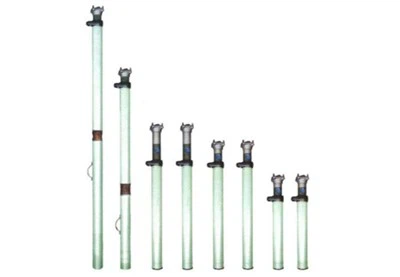

As a supplier of Double Wedge Top Beam DJBS, I've witnessed firsthand the importance of creep resistance in ensuring the long - term performance and reliability of our products. Creep is the time - dependent deformation that occurs under a constant load, and it can significantly impact the structural integrity of the Double Wedge Top Beam DJBS over time. In this blog, I'll share some effective strategies to improve the creep resistance of the Double Wedge Top Beam DJBS.


1. Material Selection
The choice of material is fundamental in enhancing the creep resistance of the Double Wedge Top Beam DJBS. High - strength alloys are often a preferred option. For example, some advanced steel alloys with specific compositions can offer superior creep resistance compared to standard steels. These alloys typically contain elements such as chromium, molybdenum, and vanadium. Chromium can form a stable oxide layer on the surface of the steel, protecting it from oxidation and reducing the likelihood of creep - related degradation. Molybdenum can improve the high - temperature strength of the steel, which is crucial when the Double Wedge Top Beam DJBS is exposed to elevated temperatures during operation. Vanadium can refine the grain structure of the steel, enhancing its overall mechanical properties and creep resistance.
Another material option is composite materials. Composites, such as carbon fiber - reinforced polymers (CFRP), have excellent strength - to - weight ratios and can offer good creep resistance. CFRP consists of carbon fibers embedded in a polymer matrix. The carbon fibers provide high strength, while the polymer matrix helps to distribute the load evenly and resist deformation. By using CFRP in the Double Wedge Top Beam DJBS, we can reduce the weight of the beam while maintaining or even improving its creep resistance.
2. Heat Treatment
Heat treatment is a powerful technique to improve the creep resistance of the Double Wedge Top Beam DJBS. One common heat treatment method is annealing. Annealing involves heating the material to a specific temperature and then slowly cooling it. This process can relieve internal stresses in the material, which are often a contributing factor to creep. By reducing internal stresses, the material becomes more stable and less prone to time - dependent deformation.
Another heat treatment method is quenching and tempering. Quenching involves rapidly cooling the material from a high temperature, which can result in a hard and strong microstructure. However, quenched materials can be brittle. Tempering is then carried out to reduce the brittleness and improve the toughness of the material. This combination of quenching and tempering can optimize the mechanical properties of the Double Wedge Top Beam DJBS, including its creep resistance.
3. Design Optimization
The design of the Double Wedge Top Beam DJBS also plays a crucial role in improving its creep resistance. One aspect of design optimization is the shape of the beam. A well - designed shape can distribute the load more evenly, reducing the stress concentration in certain areas. For example, a beam with a more streamlined shape can minimize the local stress peaks that can lead to creep.
In addition, the use of appropriate reinforcement can enhance the creep resistance. Reinforcement can be in the form of additional ribs or plates. These reinforcements can increase the stiffness of the beam and help to resist deformation under load. For instance, adding longitudinal ribs along the length of the Double Wedge Top Beam DJBS can improve its bending resistance and reduce the likelihood of creep - induced bending.
4. Surface Treatment
Surface treatment can protect the Double Wedge Top Beam DJBS from environmental factors that can accelerate creep. One common surface treatment is coating. A protective coating can act as a barrier between the material and the surrounding environment, preventing corrosion and oxidation. For example, a zinc - based coating can provide sacrificial protection to the steel beam, reducing the risk of rusting and subsequent creep - related damage.
Another surface treatment option is nitriding. Nitriding involves introducing nitrogen into the surface layer of the material, forming a hard and wear - resistant nitride layer. This layer can improve the surface hardness and reduce the friction coefficient of the beam, which can contribute to better creep resistance.
5. Comparison with Related Products
It's also beneficial to compare the Double Wedge Top Beam DJBS with related products such as Hinged Top Beam, Non - hinged Top Beam, and π Type Steel Girder. Each of these products has its own characteristics in terms of creep resistance.
The Hinged Top Beam may have different load - distribution mechanisms due to its hinged design. The hinge allows for some degree of movement, which can affect the stress distribution and potentially the creep behavior. In some cases, the hinged design may help to relieve stress in certain situations, reducing the creep rate. However, the hinge itself may also be a potential weak point if not properly designed and maintained.
The Non - hinged Top Beam, on the other hand, provides a more rigid structure. This rigidity can result in a more uniform stress distribution, which may be beneficial for creep resistance in some applications. However, it also means that any stress concentration in the beam may be more difficult to relieve, increasing the risk of creep in those areas.
The π Type Steel Girder has a unique cross - sectional shape. This shape can offer good bending and torsional resistance, which can be related to creep resistance. The distribution of material in the π shape can help to distribute the load more effectively, reducing the local stress levels and potentially improving the creep performance.
6. Monitoring and Maintenance
Even with all the measures taken to improve the creep resistance of the Double Wedge Top Beam DJBS, monitoring and maintenance are essential. Regular monitoring can detect early signs of creep, such as small deformations or changes in the material properties. Non - destructive testing methods, such as ultrasonic testing and strain gauges, can be used to monitor the condition of the beam.
Maintenance activities, such as cleaning, lubrication (if applicable), and inspection of the beam's connections, can also help to ensure its long - term performance. For example, keeping the beam clean can prevent the accumulation of dirt and debris, which can cause additional stress and potentially accelerate creep.
Conclusion
Improving the creep resistance of the Double Wedge Top Beam DJBS requires a comprehensive approach that includes material selection, heat treatment, design optimization, surface treatment, and proper monitoring and maintenance. By implementing these strategies, we can enhance the long - term performance and reliability of our products. If you're interested in purchasing Double Wedge Top Beam DJBS or have any questions about improving their creep resistance, I encourage you to contact us for further discussion and procurement negotiation.
References
- Callister, W. D., & Rethwisch, D. G. (2011). Materials Science and Engineering: An Introduction. Wiley.
- Ashby, M. F., & Jones, D. R. H. (2005). Engineering Materials 1: An Introduction to Properties, Applications, and Design. Butterworth - Heinemann.