
As a supplier of A-type Beam Shape, I've encountered numerous inquiries regarding the prediction of its deformation. This topic is not only crucial for engineers and designers but also for those involved in the construction and mining industries where these beams are widely used. In this blog, I'll share some insights into how to predict the deformation of A-type Beam Shape.
Understanding the Basics of A-type Beam Shape
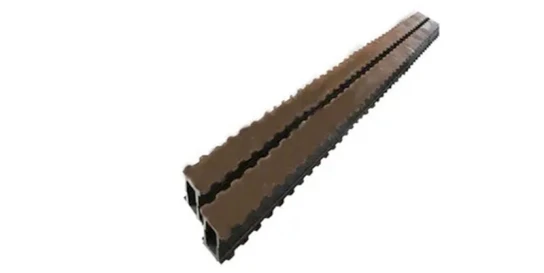
Before delving into the prediction methods, it's essential to understand the characteristics of A-type Beam Shape. These beams are known for their unique cross-sectional design, which provides excellent load-bearing capacity and stability. They are commonly used in various applications, such as Metal Long Beam, Cross Roof Beam For Mining, and Double Hole and Double Wedge Top Beam.
The deformation of an A-type beam is influenced by several factors, including the material properties, loading conditions, and geometric dimensions. For instance, the modulus of elasticity of the material determines how much the beam will stretch or compress under a given load. A higher modulus of elasticity means the beam is stiffer and will deform less.
Material Properties and Their Impact on Deformation
The material used to manufacture the A-type beam plays a significant role in its deformation behavior. Common materials for these beams include steel, aluminum, and various alloys. Each material has its own set of mechanical properties, such as yield strength, ultimate strength, and modulus of elasticity.
Steel is a popular choice for A-type beams due to its high strength and stiffness. It can withstand large loads without significant deformation. However, steel is also relatively heavy, which may be a drawback in some applications. Aluminum, on the other hand, is lightweight and corrosion-resistant, but it has a lower modulus of elasticity compared to steel. This means that an aluminum A-type beam will deform more under the same load as a steel beam of the same dimensions.
When predicting the deformation of an A-type beam, it's crucial to accurately determine the material properties. This can be done through material testing, where samples of the material are subjected to various mechanical tests to measure their strength and stiffness. Once the material properties are known, they can be used in deformation prediction models.
Loading Conditions and Deformation
The type and magnitude of the load applied to the A-type beam are also critical factors in deformation prediction. There are several types of loads that a beam may experience, including point loads, distributed loads, and moment loads.
A point load is a concentrated force applied at a single point on the beam. This type of load can cause significant local deformation at the point of application. Distributed loads, on the other hand, are spread over a length or area of the beam. Examples of distributed loads include the weight of the beam itself and the weight of any objects resting on it. Moment loads are forces that cause the beam to bend or twist.
To predict the deformation of an A-type beam under different loading conditions, engineers use various mathematical models. One of the most commonly used models is the Euler-Bernoulli beam theory. This theory assumes that the beam is slender, the material is linearly elastic, and the cross-section remains plane and perpendicular to the neutral axis during deformation.
The Euler-Bernoulli beam theory provides equations for calculating the deflection and slope of the beam at any point along its length. These equations take into account the material properties, loading conditions, and geometric dimensions of the beam. By solving these equations, engineers can predict how much the beam will deform under a given load.
Geometric Dimensions and Deformation
The geometric dimensions of the A-type beam, such as its length, width, and height, also affect its deformation behavior. A longer beam will generally deform more than a shorter beam under the same load. This is because the longer beam has more length over which the load can cause bending and deflection.
The cross-sectional shape of the A-type beam also plays a role in its deformation. The unique A-shaped cross-section provides additional stiffness and strength compared to other beam shapes. The shape of the cross-section affects the moment of inertia, which is a measure of the beam's resistance to bending. A higher moment of inertia means the beam is more resistant to deformation.
When designing an A-type beam, engineers carefully consider the geometric dimensions to ensure that the beam can withstand the expected loads without excessive deformation. They may use computer-aided design (CAD) software to model the beam and analyze its deformation under different conditions.
Finite Element Analysis (FEA) for Deformation Prediction
In addition to analytical methods like the Euler-Bernoulli beam theory, finite element analysis (FEA) is a powerful tool for predicting the deformation of A-type beams. FEA is a numerical method that divides the beam into small elements and analyzes the behavior of each element under the applied loads.
FEA software can handle complex geometries, material properties, and loading conditions that may be difficult to analyze using analytical methods. It can also provide detailed information about the stress and strain distribution within the beam, which is useful for identifying potential failure points.
To perform an FEA analysis of an A-type beam, the engineer first creates a 3D model of the beam using CAD software. The model is then imported into the FEA software, where it is meshed into small elements. The material properties and loading conditions are defined, and the software solves the equations to calculate the deformation of the beam.
Importance of Deformation Prediction
Predicting the deformation of A-type beams is essential for several reasons. First, it helps ensure the safety and reliability of the structure. Excessive deformation can lead to structural failure, which can have serious consequences, especially in applications such as mining and construction.
Second, deformation prediction allows engineers to optimize the design of the beam. By accurately predicting the deformation, they can adjust the geometric dimensions and material properties to minimize the deformation while still meeting the required load-bearing capacity. This can result in cost savings and more efficient use of materials.
Finally, deformation prediction is important for quality control. By comparing the predicted deformation with the actual deformation measured during testing, manufacturers can ensure that the beams meet the specified standards.
Contact for Procurement and Discussion
If you're interested in purchasing A-type Beam Shape or have any questions about deformation prediction, feel free to reach out. We're here to provide you with the best products and technical support. Whether you're working on a construction project or a mining operation, our A-type beams can meet your needs.

References
- Gere, J. M., & Timoshenko, S. P. (1997). Mechanics of Materials. PWS Publishing Company.
- Cook, R. D., Malkus, D. S., Plesha, M. E., & Witt, R. J. (2007). Concepts and Applications of Finite Element Analysis. John Wiley & Sons.